Binding a quilt
Binding is a strip of fabric folded in half and sewn around the edge of the quilt, covering the raw edges of the top, batting and backing. A 60" × 72" throw takes 7 strips 2½" wide, joined into one strip 276" long: the distance around the quilt plus 12" for the joins and the ends.
This is double-fold binding, the kind most quilters use. It is sewn to the front by machine and finished on the back by hand, or by machine if you prefer.
By Editorial Staff
Making the binding strip
Cut 2½" strips across the width of the fabric. The table at the bottom of this page gives the number for each bed size.
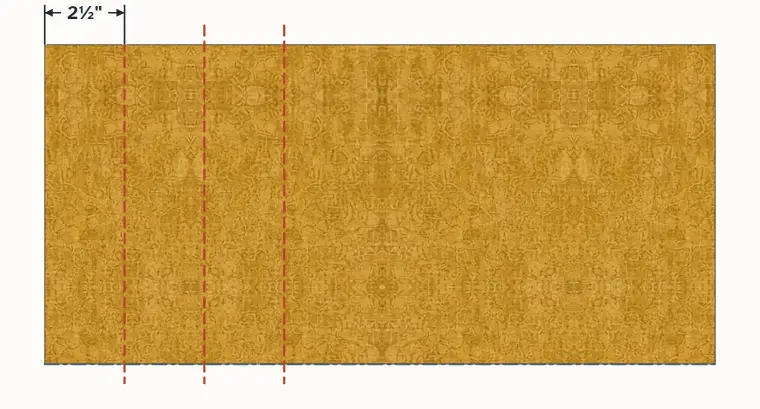
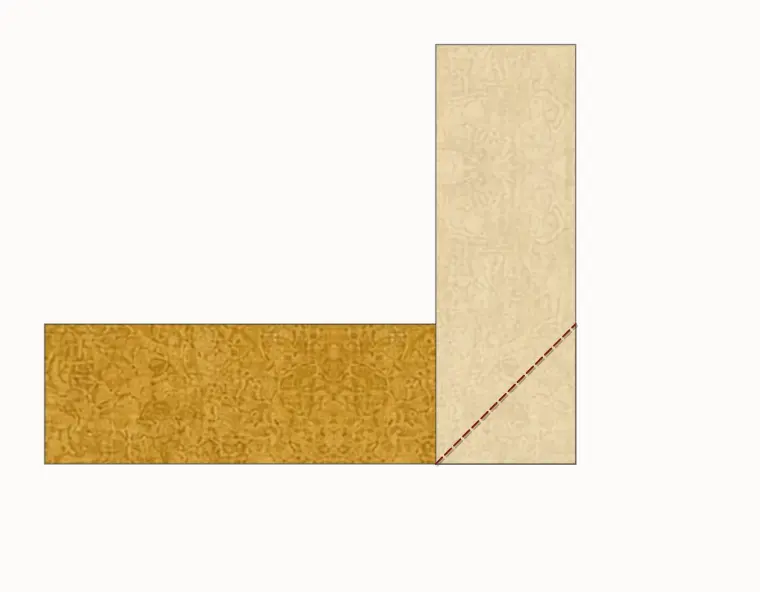
Join the strips end to end with diagonal seams. Lay one strip across the end of the next at a right angle, right sides together, and sew corner to corner across the square where they overlap.
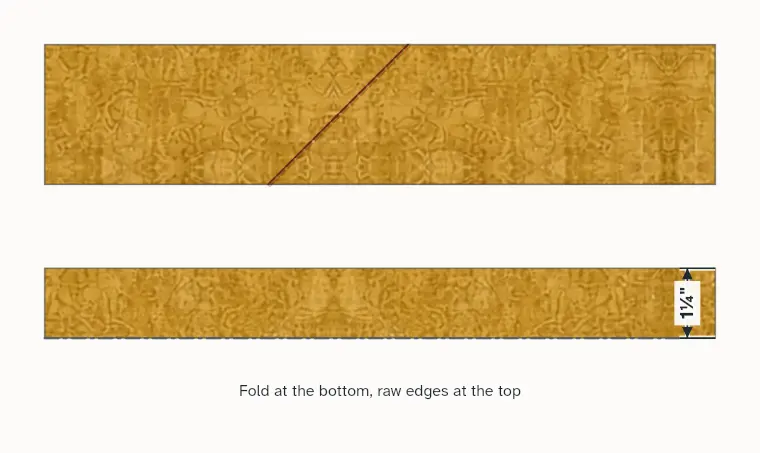
Trim ¼" past each seam and press the seams open. Then fold the whole strip in half lengthwise, wrong sides together, and press. It is now 1¼" wide, with a fold on one side and both raw edges on the other.
Sewing the binding to the front
Trim the batting and backing even with the quilt top. Starting partway along one side, lay the binding on the front with its raw edges along the edge of the quilt. Leave the first 8" loose as a tail and start sewing with a ¼" seam. A walking foot keeps the layers from shifting.
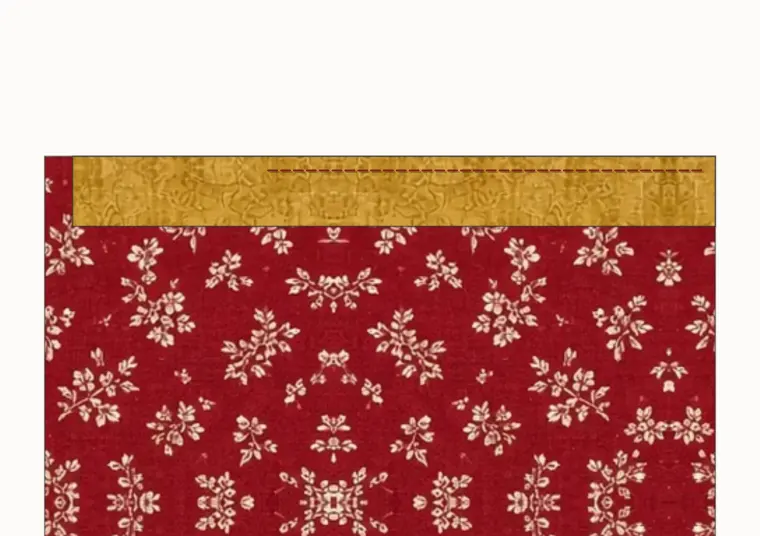
Stop ¼" before the corner and backstitch. Take the quilt out from under the needle.
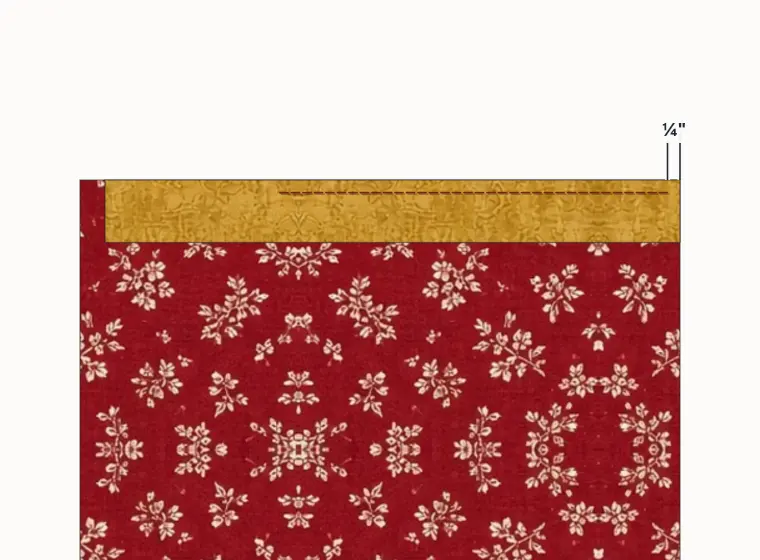
Fold the binding straight up, away from the quilt, so it makes a 45° fold at the corner and its raw edge runs straight up from the next side.
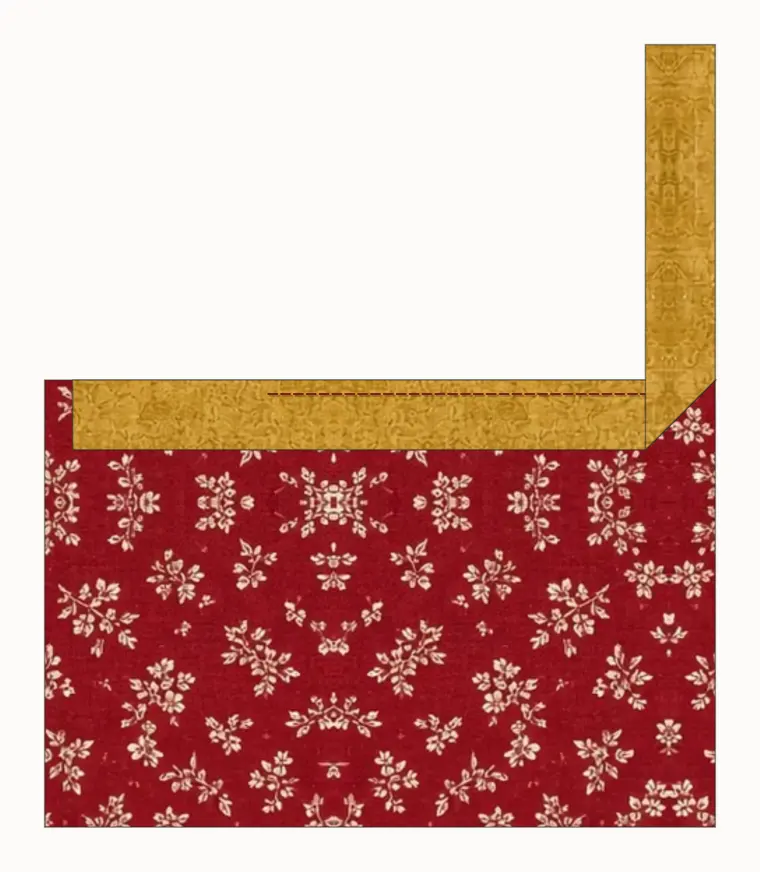
Fold it back down over itself, with the new fold even with the top edge of the quilt and the raw edges along the next side. Start sewing at the fold and carry on down the side. Repeat at every corner.
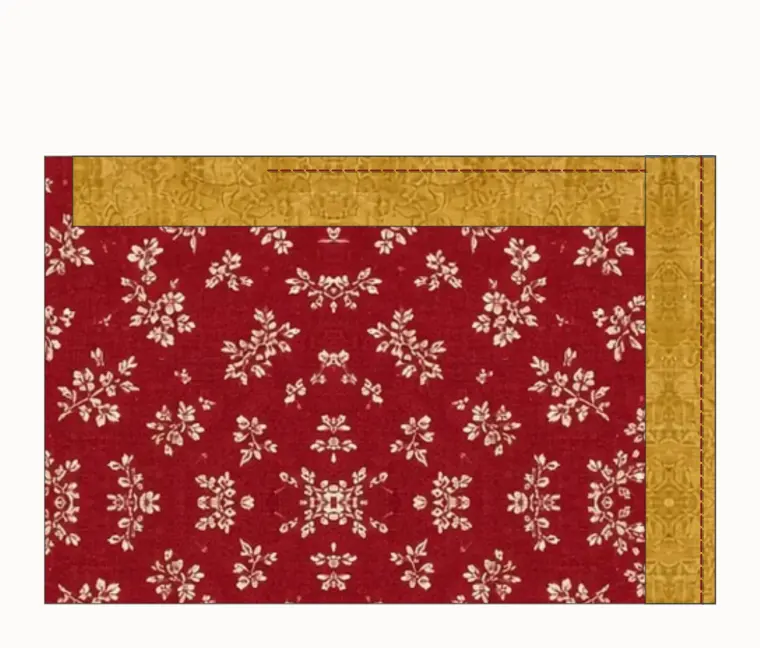
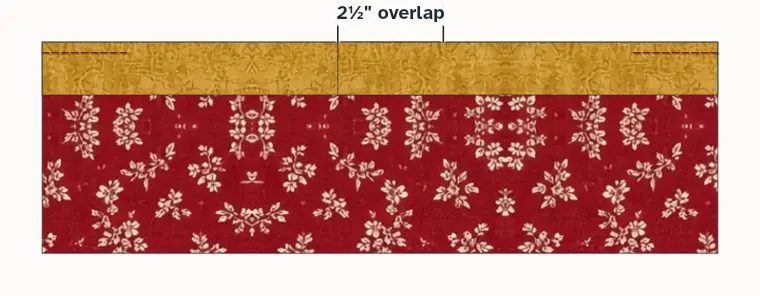
Stop sewing about 10" before where you started. Lay both tails flat along the edge, overlapping, and trim them so they overlap by exactly 2½", the width of the strip. Open them out, join them with a diagonal seam like the others, check that the binding fits, trim, and sew the last stretch.
Finishing on the back
Fold the binding over the edge to the back so its fold just covers the line of machine stitching. Hold it with clips, and sew the fold down by hand with a blind stitch, catching only the backing so the stitches don't show on the front. At each corner, fold the miter the same way as on the front.
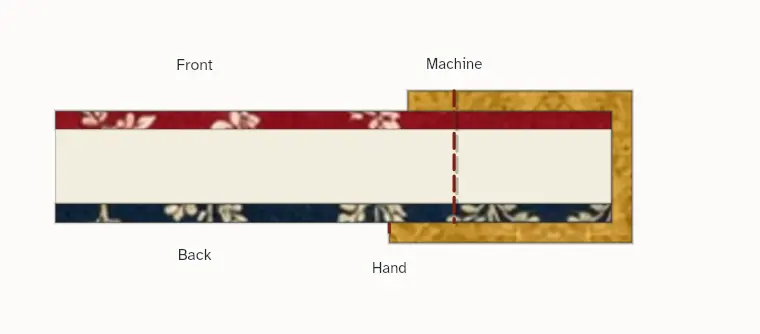
To finish by machine instead, sew the binding to the back first, wrap it to the front, and topstitch just inside its fold.
Binding strips for every bed size
| Size | Quilt | Strips 2½" × WOF | Joined length | Fabric |
|---|---|---|---|---|
| Crib | 45" × 60" | 6 | 222" | ½ yd |
| Throw | 60" × 72" | 7 | 276" | ¾ yd |
| Twin | 70" × 90" | 8 | 332" | ¾ yd |
| Full | 84" × 96" | 9 | 372" | ¾ yd |
| Queen | 90" × 108" | 10 | 408" | 1 yd |
| King | 108" × 108" | 11 | 444" | 1 yd |
The binding calculator works it out for any size and strip width.

Plan your next quilt in your own fabric
Quiltspiration draws any pattern in the fabric you own and works out the cut list for any size.