How to sew a quarter inch seam
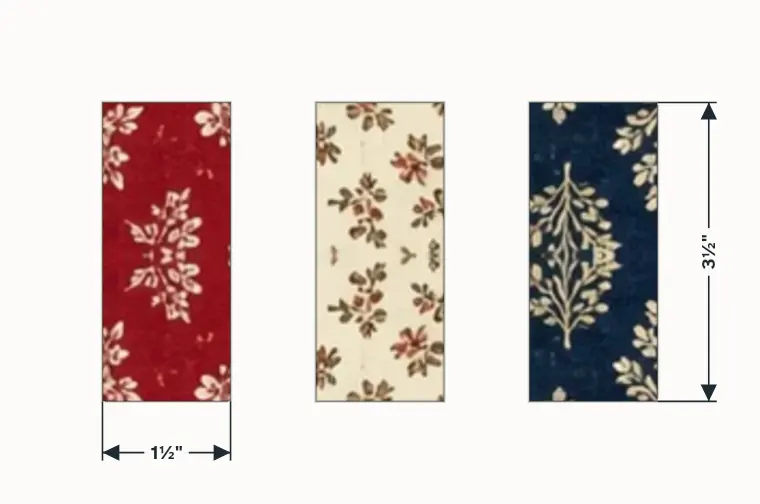
Quilt patterns add ¼" to every side of every piece for the seam, so the seam has to be ¼" wide for the pieces to finish at the right size. Three 1½" strips sewn with true ¼" seams measure 3½" across.
A small error grows with every seam. A seam 1⁄16" too wide takes ⅛" off each join, so a row of four squares comes out ⅜" short, enough that blocks won't match the sashing.
By Editorial Staff
The three-strip test
Cut three strips of fabric 1½" × 3½".
Sew them together along the long edges with what you think is a ¼" seam, and press the seams to one side.
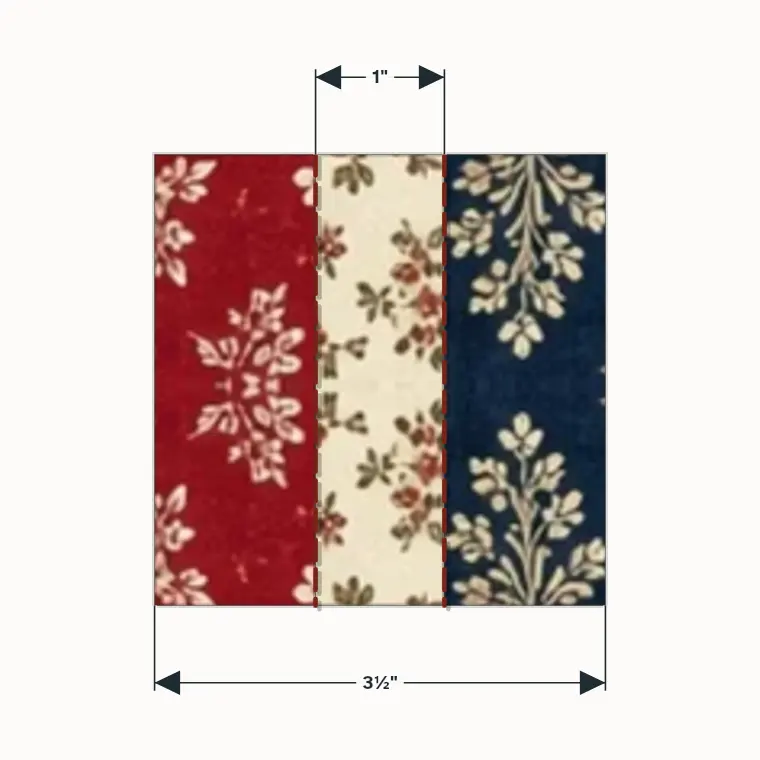
Measure. The unit should be 3½" across and the middle strip 1" wide. Narrower means your seam is too wide; wider means it is too narrow. Move the needle position or your seam guide a little and sew the test again.
How a small error adds up
| Pieces in a row | Seams | Each seam 1/32" too wide | Each seam 1/16" too wide |
|---|---|---|---|
| 3 | 2 | ⅛" short | ¼" short |
| 4 | 3 | ¼" short | ⅜" short |
| 6 | 5 | ⅜" short | ⅝" short |
| 8 | 7 | ½" short | ⅞" short |
A "scant" ¼" is a thread or two narrower than ¼". The fold of fabric over the seam takes up a little width when you press, so many quilters sew a scant ¼" to make blocks finish at the full size. The strip test tells you whether you need it.
Seam guides
A ¼" presser foot with a metal guide on the right is the most reliable. Without one, lay a ruler under the needle, lower the needle onto the ¼" line, and stick a stack of painter's tape or a strip of moleskin along the ruler's edge as a fence. Check your machine's manual before using a magnetic seam guide on a computerized machine.

Plan your next quilt in your own fabric
Quiltspiration draws any pattern in the fabric you own and works out the cut list for any size.