Barn quilt meaning
A barn quilt is a painted quilt block hung on a barn, often 8 feet square. Most honor a family, a quilter or the history of a farm, and most are part of a quilt trail: a driving route that links the painted squares of a county.
By Editorial Staff
Where barn quilts began
The quilt trail started in Adams County, Ohio. Donna Sue Groves wanted to paint a quilt square on the tobacco barn on her family's farm to honor her mother, Maxine, a quilter. As she talked about it, neighbors offered their barns too, and the idea grew into a trail of 20 quilt squares across the county, called the Clothesline of Quilts.
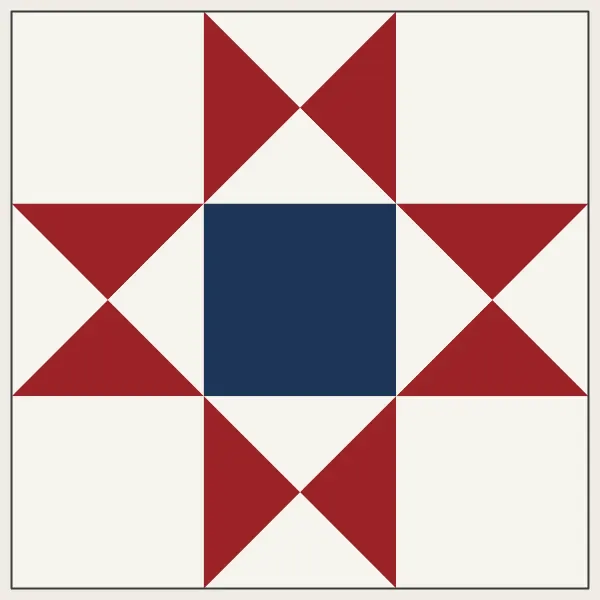
The first square was an Ohio Star, painted by local artists and dedicated in October 2001 on a building at a nearby herb farm, where there was room for a public celebration. The Groves barn later got its own square, a Snail's Trail.
Neighboring Brown County started a trail soon after, and the idea spread county by county. Today there are quilt trails in more than 30 states and in Canada, and thousands of barn quilts on barns, sheds, houses and fences.
What the patterns mean
A barn quilt means what its owners choose it to mean. Families often copy a block from a quilt made by a grandmother or great-grandmother, pick one whose name fits the farm, or paint the colors of a local school. Quilt trail committees often ask each owner for the story behind the square and print it on the trail map.
Many traditional block names come from farm life, the Bible and places, which is part of why they suit barns:
Ohio Star. Named for the state; also called Variable Star. It was the first square on the first quilt trail.
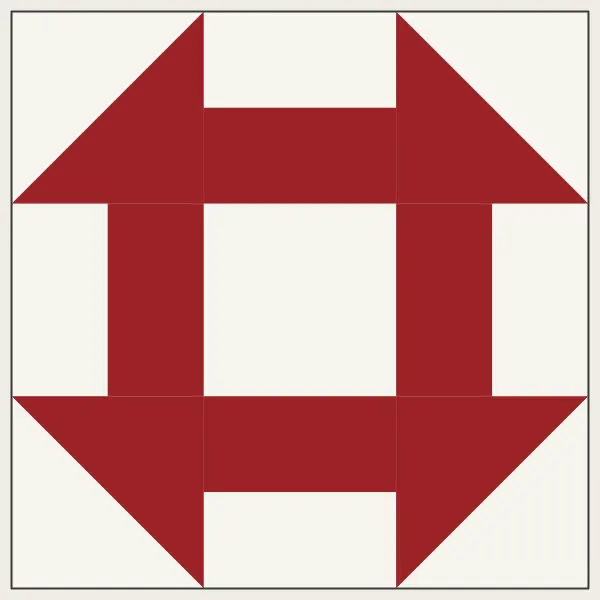
Churn Dash. The dasher of a butter churn, the stick that is pushed up and down to make butter. A farm kitchen tool in a farm block.
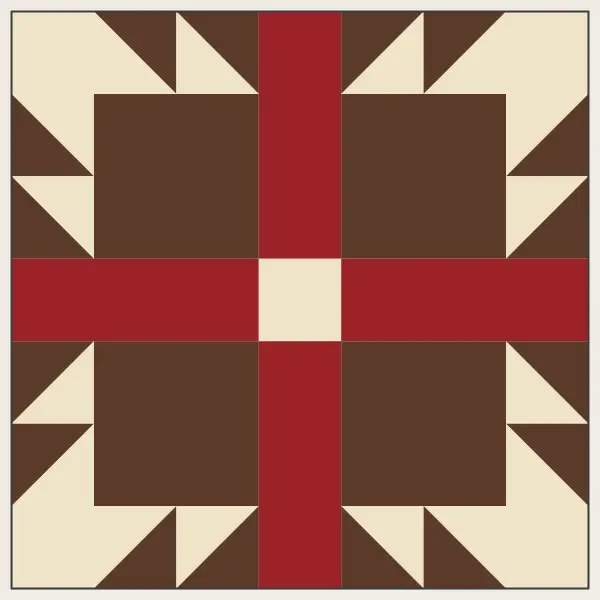
Bear Paw. Four paw prints with claws. Old quilt books record it as Duck's Foot in the Mud on Long Island and Hand of Friendship among Philadelphia Quakers.
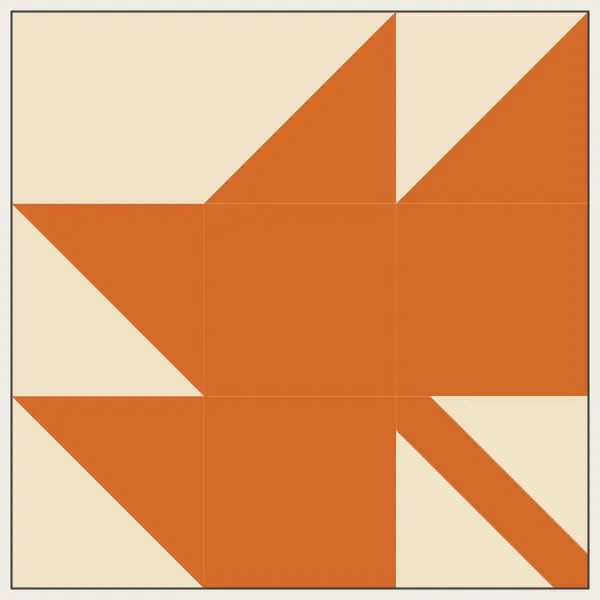
Maple Leaf. A leaf with a pieced stem, often painted in fall colors on farms with sugar maples.
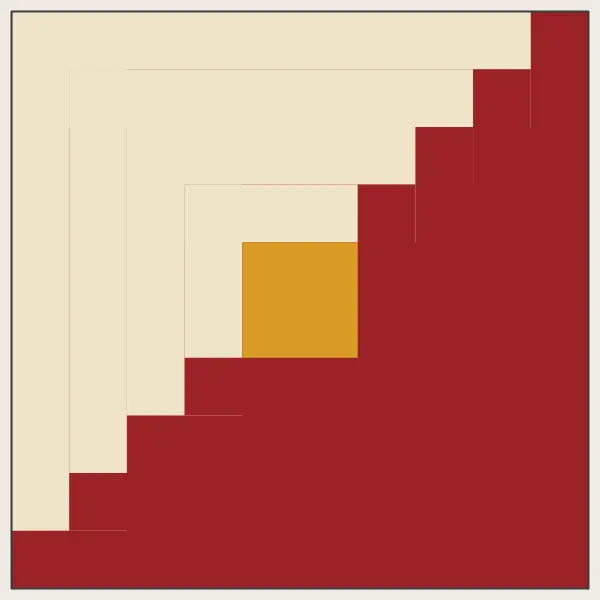
Log Cabin. Logs built up around a center square, the way a cabin wall goes up. Quilters often say a red center stands for the hearth, though that is tradition rather than a rule.
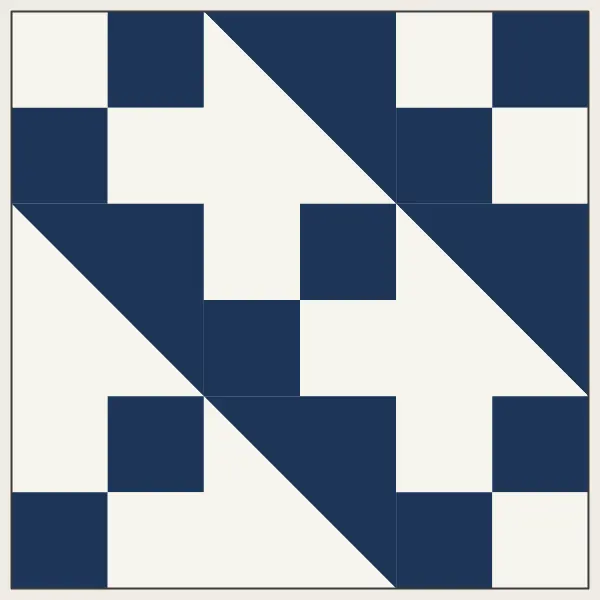
Jacob's Ladder. Named for the ladder in Genesis. The small squares make a chain that climbs corner to corner.
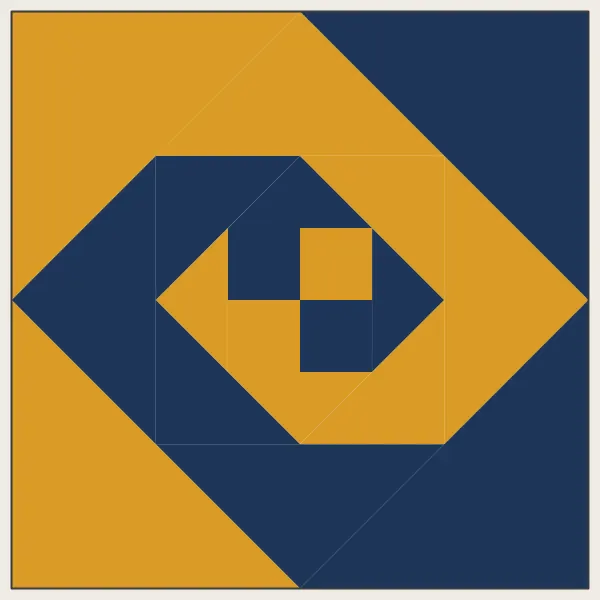
Snail's Trail. A spiral of triangles. The Snail's Trail on the Groves barn honors Maxine Groves, whose quilting started the quilt trail.
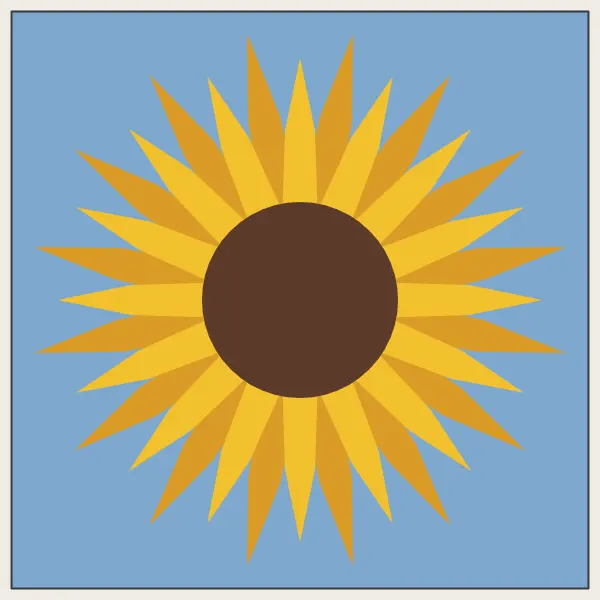
Sunflower. Not a pieced quilt block but a painted design, a natural choice in Kansas, the Sunflower State, and on farms that grow them.
Barn quilts and the Underground Railroad
A story often told with barn quilts is that quilts hung outside as signals on the Underground Railroad, each block a coded message. It became widely known through the 1999 book Hidden in Plain View. Historians and quilt historians have found no evidence for it: no memoir, diary or 1930s interview with a formerly enslaved person mentions a quilt code, and one of the book's own authors called it informed conjecture. Barn quilts themselves date from 2001.
Older painted barns
Painting on barns is older than the quilt trail. In southeastern Pennsylvania, round painted designs called hex signs have decorated barns since the 1800s. Barn quilts borrow the idea of a painted sign but use square quilt blocks, which tie them to the quilts made in the same farmhouses.
Sources
- Quilt trail, Wikipedia
- Barn quilts, Ohio Magazine
- Donna Sue Groves, Quilt Alliance
- Quilts of the Underground Railroad, Wikipedia
- Suzi Parron with Donna Sue Groves, Barn Quilts and the American Quilt Trail Movement, Swallow Press, 2012
To paint one of your own, see the barn quilt patterns, each with measurements and paint for 2, 4 and 8 ft boards, and how to make a barn quilt.
Draw your family's block in any colors
Quiltspiration draws any block in your colors or your own fabric.