How to choose fabric for a quilt
Most quilts are made of quilting cotton: a medium-weight, closely woven 100% cotton about 42" wide. It presses crisply, holds a ¼" seam, and wears well. Every swatch below is a real fabric, shown 3" across.
By Editorial Staff
Kinds of fabric
A good quilt mixes kinds of fabric. Solids and tonal blenders let the eye rest and make the piecing show; small prints read as texture from a few feet away; large prints are best in big pieces, where the motif isn't cut up.
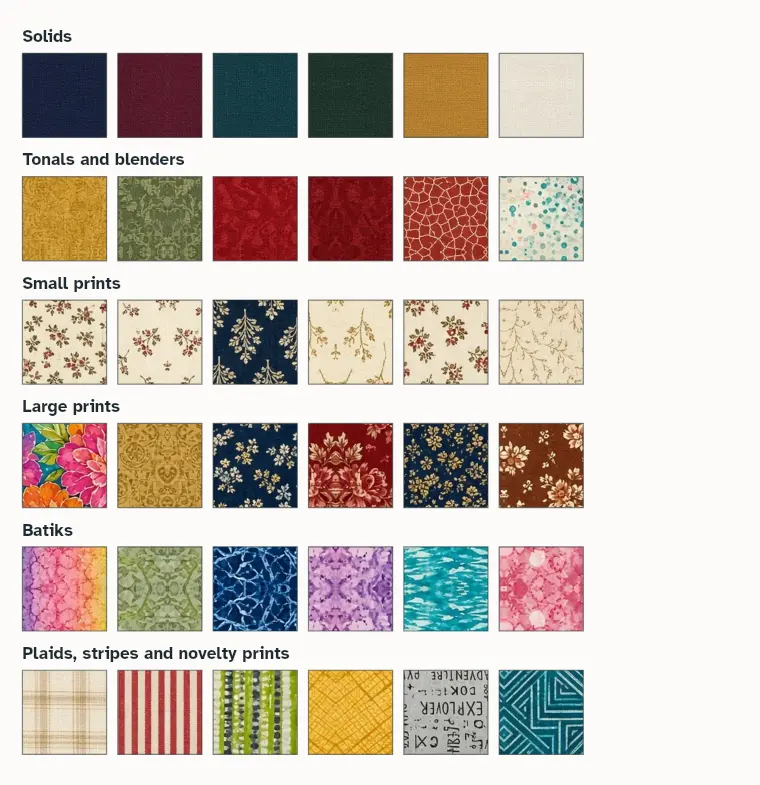
Batiks are dyed with wax resist on a tighter weave, so they fray less and their colors blend from one to the next. Plaids and stripes add movement but show any piece that isn't cut straight.
Avoid thin, loosely woven fabric and anything with stretch for piecing; they won't hold a seam. Knits need interfacing, as in a t-shirt quilt.
To prewash or not
Prewashing shrinks the fabric before you cut, removes sizing, and lets strong reds bleed before they are in a quilt. Not prewashing keeps the fabric crisp for cutting and gives the crinkled look after the first wash. Either works; don't mix washed and unwashed fabric in one quilt, and never prewash precuts, which fray and shrink out of shape.
How much to buy
Each pattern gives the yardage for every bed size with 10% extra. For a quilt of your own design, the fabric yardage calculator turns pieces into yards, and the precut sizes page shows what jelly rolls, layer cakes and fat quarters hold.
Plan your next quilt in your own fabric
Quiltspiration draws any pattern in the fabric you own and works out the cut list for any size.