Free motion quilting patterns
In free motion quilting the feed dogs are dropped and you move the quilt by hand, so the needle can go in any direction. That freedom makes curves and all-over designs possible on a home sewing machine, and it takes practice: the five designs below are in the order most quilters learn them.
By Editorial Staff
Five designs, easiest first
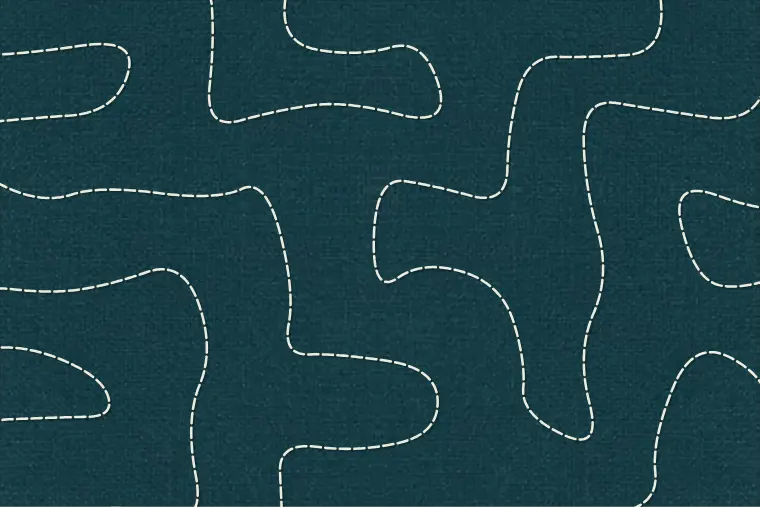
MeanderBeginner, lines 1¼" apart
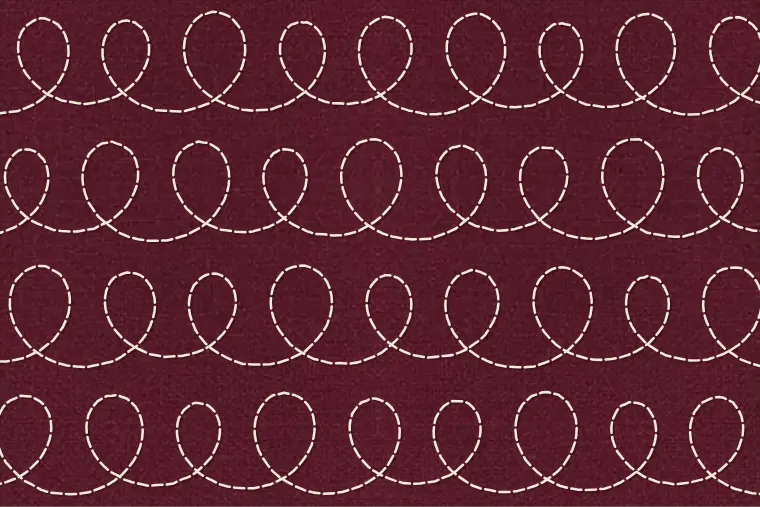
LoopsBeginner, lines 2" rows apart
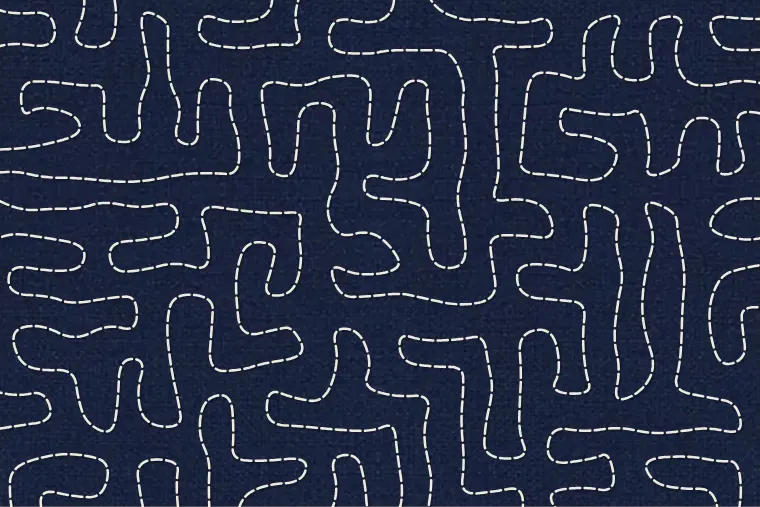
StipplingIntermediate, lines ½" apart
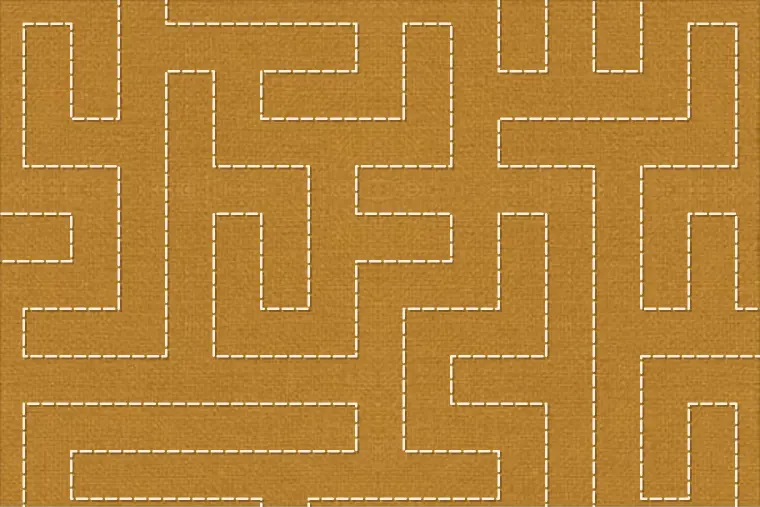
Boxy meanderIntermediate, lines ¾" apart
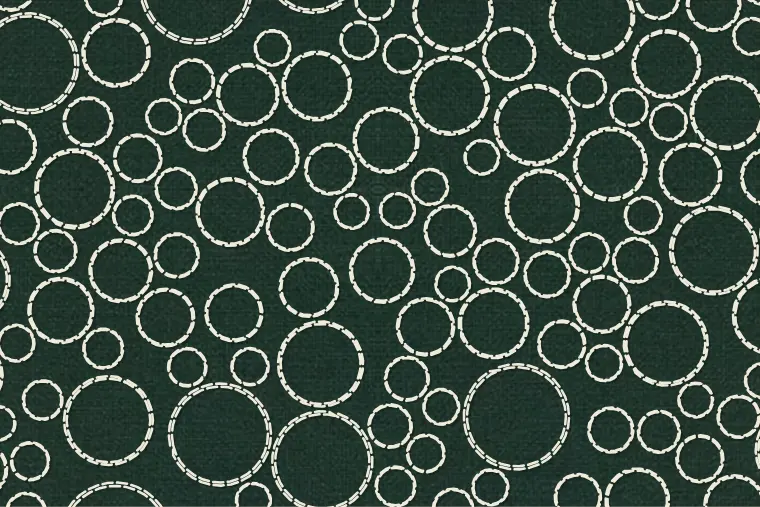
PebblesAdvanced, lines circles up to 1¾" apart
| Design | Home machine | Stitching on a throw | Thread, top and bobbin |
|---|---|---|---|
| Meander | Beginner | 89 yd | 245 yd |
| Loops | Beginner | 204 yd | 560 yd |
| Stippling | Intermediate | 223 yd | 614 yd |
| Boxy meander | Intermediate | 160 yd | 441 yd |
| Pebbles | Advanced | 419 yd | 1153 yd |
For a 60" × 72" throw. Denser designs take more thread and more time: pebbles take about four times the stitching of a meander.
Setting up a home machine
- Drop the feed dogs, or cover them if your machine can't drop them, and fit a free-motion or darning foot. Some quilters set the stitch length to 0 as well.
- Put in a new topstitch needle, 80/12 for 50 weight thread or 90/14 for 40 weight.
- Make a practice sandwich at least 12" square from the same fabric and batting as your quilt, and check the tension on it before every session.
- Run the machine at a steady medium speed and move the quilt smoothly. Aim for 10 to 12 stitches an inch; even stitches matter more than the exact count.
- Start each line by bringing the bobbin thread up and taking a few tiny stitches, and end the same way.
Fixing common problems
| What you see | What to do |
|---|---|
| Loops of top thread on the back ("eyelashes") at the curves | You moved the quilt faster than the needle round a curve, or the top tension is too loose. Slow your hands on curves first, then tighten the top tension a step. |
| Tiny stitches piling up | Your hands are slower than the needle. Speed up your hands or slow the machine. |
| Long, uneven stitches | Your hands are faster than the needle. Run the machine a little faster, or move more slowly. |
| Thread breaking or shredding | Change the needle; free motion is hard on needles. A topstitch needle, size 80/12 or 90/14, has a longer eye that protects the thread. |
| The quilt drags and the line jerks | Support the whole quilt on the table so no weight hangs off the edge. A slick slider mat on the machine bed and quilting gloves help the quilt glide. |
More designs to stitch free motion
See the quilting on your quilt
Quiltspiration draws your quilt in your own fabric, quilting included.